
The Match of WrestleMania That Almost Happened.
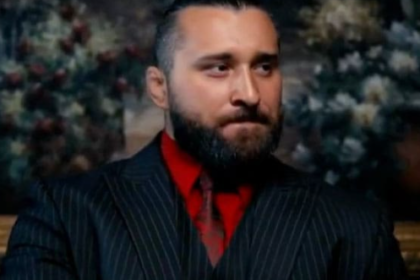
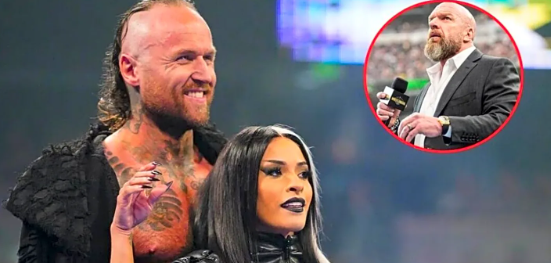
The word went round that WrestleMania 41 could have a surprise opponent against Randy Orton, and fans went on a rampage speculating on the possible name of an opponent, and one of the names that came to mind was that of Aleister Black, the former NXT star who had returned. It was not just a rumor: Black’s answer was rumored to be discussed by creative teams at WWE as they had closed-door meetings, which discussed having Black answer their open challenge by Orton. To most of them, it would have been a big, risky re-entry into the largest arena in professional wrestling.
But finally, the plan was abandoned. Why? The company did not wish for his comeback match to be a loss, according to Black. The risk of the returning star to face somebody like Orton, in general and at WrestleMania in particular, was too high. In case Black lost, there was the possibility that his comeback would be tainted by a loss. The rationale: with talent reintroduction, particularly after the absence of time, it is advisable to provide them with a gentle landing and one hundred percent attention.
Why the Decision Made Sense According to Black.
In the case of Black, he was not angry or disappointed about WWE switching the plans, but relieved. Even internally, he confessed that it was an honor in his heart to be invited even to the table: the thought of having Randy Orton all to himself at WrestleMania would have been his dream come true. Nevertheless, when the promotion decided to make a later return, he believed that the decision worked out as more beneficial to him.
Instead of making his debut in front of the possibility of thousands of fans, and then losing, thus confusing his comeback, Black took the opportunity to make his own comeback, where the stage will be all his, and he can make a better splash. It was also a way of enabling WWE to recraft his comeback as one that focused on Black himself, not getting lost in a massive loss or hastily written plot.
What Happened Instead: A Return With Respect and Focus.
WWE waited instead of taking him into the wildcard at Wrestlemania to become a surprise. Black returned officially after WrestleMania, during a post-episode of SmackDown. In that debut, he left a mark by hitting a very strong move and re-establishing himself without the pressure and uncertainty of losing in full view of the whole wrestling world.
The new path was breathing space to Black, although those fans who had wanted to see him clash with Orton at WrestleMania may have felt cheated. He would be able to remind the audience what made him special initially: his attitude, his presentation, and the danger he poses, without necessarily having to put him back or clean him up, with the help of a loss.
Bigger Picture: Why WWE Does Not Sometimes Show Return Matches.
The choice to split Black out of a WrestleMania-grade comeback represents a larger wrestling booking idea, namely, that the splash of a star isn’t necessarily the most important thing in that case, but rather the time, the building of the moment, and image. Too early a debut or one that is ill-conceived may be worse than the best.
In the case of such a person as Black, with history, identity, and pre-established fan anticipations, the company and even the wrestler as a person not only understood that a more gentle, properly built comeback could have a more positive long-term outcome as compared to a flashy, yet hazardous surprise debut.
What does it imply for the Future of Aleister Black?
The fact that Black accepted the decision says a lot: he is not just seeking immediate attention. He appears to concentrate on long-term, regularity and establishing an image on his own terms. He is more likely to establish a place, or even compete to be a champion, by getting back into the fray after WrestleMania and being able to shape his own entrance to the world without the stigma of a comeback loss.