
A Firestorm Turned out to be a Cabinet Meeting.
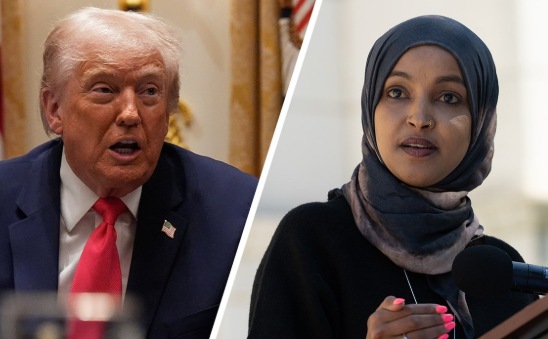
Though most people would have assumed that a cabinet meeting on December 2, 2025, would focus on policy and governance, America was instead treated to a stunning scene when President Trump took a break of leaf to attack immigrants, mostly of Somali descent, and even singled out Ilhan Omar, a Somali-American congresswoman, using derogatory language. He was not very diplomatic; he referred to Somalia as miserable, the people in the country as garbage, and he was very straightforward by saying that he did not want the people in the country in his country. The brashness and inhumanity of those statements shocked viewers, immediately made headlines around the world, and made a former policy meeting into an ethical and political debacle.
- A Firestorm Turned out to be a Cabinet Meeting.
- Dehumanizing Words: What Makes the Comments Dangerous.
- Reactions by the Community: Rage, Fear, and Hurt.
- The Implications of This for Immigration Enforcement and the Somali-American Community.
- Implications on a Global Scale: Leadership, Reputation, and Broken Dialogue.
- The Bigger Question: Where do we go now?
Dehumanizing Words: What Makes the Comments Dangerous.
Words are powerful things, and in this case, that was the power to dehumanize. Trump relegated people to the status of garbage by generalizing about a whole nationality and community, eliminating the sense of a person and history, and replacing subtlety with terror. What it meant was obvious: the immigrants needed to demonstrate their value in order to belong, to be accepted; otherwise, they risk being treated as useless. To some, these are not only cruel words but also the echo of the most sinister times of prejudice, rejection, and institutional marginalization.
Reactions by the Community: Rage, Fear, and Hurt.
The response was both immediate and vehement in the U.S. and internationally. There was shock, outrage, and hurt within the Somali communities, whether it was in Minnesota or Somalia, or the global diaspora. To most of the immigrants and refugees who have left their lands in search of safety, dignity, and opportunity, the comments not only sting but, in some way it reopen old wounds. There were leaders who openly denounced the language as racist and unacceptable; others spoke about how such statements would breed violence, discrimination, and a feeling of alienation in already vulnerable communities.
Meanwhile, there were some voices trying to divide the anger of Trump, claiming that he responded to certain criminal accusations associated with a limited group of Somali-Americans. Nevertheless, even among those who were more sympathetic, though perhaps sceptical of the framing by Trump, many of them reacted against the generalizations. Making an entire people suffer because of the deeds of a small number of people compromises justice, compassion, and the concept of humanity, they cautioned.
The Implications of This for Immigration Enforcement and the Somali-American Community.
This rhetoric did not occur in a vacuum. It goes along with efforts of U.S. immigration officials, who have been reported to escalate their enforcement efforts in the Minneapolis-St. The Paul region, in order to deport Somali immigrants (those with final deportation orders). Raids and detentions are a nightmare for a number of families. The top message is personal: you are not wanted. That is not only a chilling effect on the political side but is endangering the feeling of belonging, security, and stability of thousands of people who have made America their home.
Implications on a Global Scale: Leadership, Reputation, and Broken Dialogue.
A world leader can have far-reaching impacts when he or she uses such provocative terms. The comments hurt America as a country of opportunity, tolerance, and refuge. Countries and societies will closely follow internally, not only what they hear, but what they observe. The dehumanizing language supported by the highest office makes it more difficult to advocate the human rights, the humane system of immigration, and the collaboration of the world.
The Bigger Question: Where do we go now?
Above all, this episode makes society reckon critically: regarding what sort of discourse we are ready to accept, and what we regard as human decency. Should we have those in authority demean people with slurs and stereotypes? Is it that we are playing stooge when a whole ethnic group gets branded under generalizations? Or are we retreating through words, legislation, and unity to declare once again that human dignity is not conditional? To immigrants, to marginalized communities, to everyone who upholds the notion of respect and equality – the stakes have never been greater.