
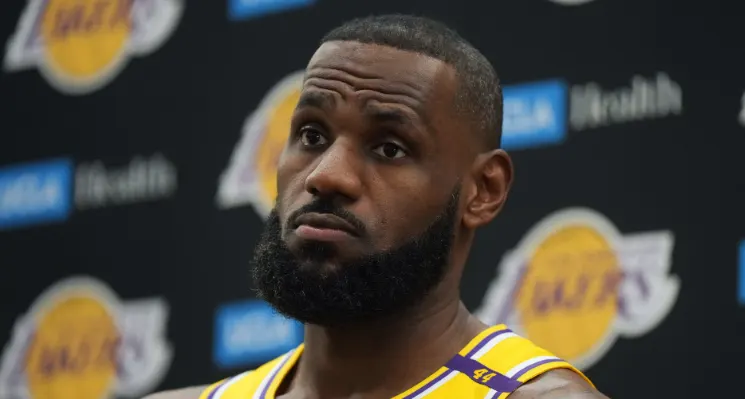
With LeBron James expected back in the lineup for the Los Angeles Lakers, the spotlight turns to how he’ll fit into a squad already humming without him. At 40 years old and entering his 23rd season, it’s not simply about return; it’s about reinvention.
A Supporting Cast on the Rise
While LeBron recovers from sciatica and prepares to rejoin the rotation, the Lakers have thrived in his absence. The team currently stands at 8-3 without him on the court. At the same time, stars like Luka Dončić and Austin Reaves have taken the reins, Dončić posting MVP-caliber numbers and Reaves cementing himself as a legit No. 3 option.
With Dončić clearly the cornerstone for the future, the question becomes: where does LeBron fit? The answer lies in impact over volume. Instead of traditional “lead man” duties, his value shifts to when and how he appears.
From Lead Star to Strategic Catalyst
LeBron’s game has always spanned scoring, play-making, and physical dominance. But at this stage, success will come from wise usage, delayed exertion, and situational dominance. When he returns, we’ll likely see:
-
More off-ball movement, letting Dončić run primary sets
-
Spot-up shooting and selective drives instead of full-court grind
-
Smart defensive assignments rather than trying to chase younger wings
-
Moments of aggression when games tilt toward key stretches
This isn’t a demotion—it’s evolution. LeBron becomes the veteran who tilts games, not carries them 40 minutes every night.
Chemistry & Role Distribution
Chemistry will be critical. Reaves has thrived as a go-to option with LeBron absent, averaging high usage and productivity. Will he willingly shift into the third-option role once LeBron returns? The locker room dynamic shifts when generations overlap. The Lakers’ best path: define clear roles and let each star operate within them.
-
Dončić = engine of the offense
-
LeBron = trusted play-maker, decoy, closer
-
Reaves is = versatile secondary creator
-
Supporting cast (e.g., DeAndre Ayton, Rui Hachimura, Marcus Smart) = enable and defend
Defensive Realities & Age Implications
No one needs reminding that age impacts defense. LeBron’s ability to guard younger, quicker wings may be compromised, and the Lakers’ overall defensive efficacy has room to grow. For this team to contend deep:
-
LeBron must defend smart (positioning, help side) rather than trying to harbor every tag-up
-
The team’s margin for error is smaller role players must elevate their defensive game
-
LeBron’s minutes will need to be managed to preserve effectiveness in late-season and playoff crunch time
What to Watch in His Return
The narrative will shift once we see LeBron consistently in game action. Key things to monitor:
-
His minutes and conditioning: Are there signs of load management or rust?
-
Shot/usage distribution: How often does Dončić have the ball when LeBron is on vs off?
-
Impact on team offense efficiency: Does the team become more potent or more sluggish?
-
Defensive on-court/off-court splits: Is the back-line worse when he plays?
-
Playoff readiness: Regular season fits matter, but the late-April and May tests are the ultimate proving ground.
The Bigger Picture: Time Is Precious
This season may carry a sense of urgency for LeBron and the franchise. He’s one of the all-time greats, but every year counts a little more at this juncture. The Lakers aren’t just adding LeBron, they’re integrating a legend into a team in motion. If it works, it could springboard into a deep playoff run. If it struggles, the questions about next year and beyond will be louder.
For Lakers fans, this isn’t just about seeing LeBron back on the court; it’s about seeing a re-defined LeBron make sense within a new era of Lakers basketball. And for LeBron, this is another chapter, perhaps the most strategically nuanced chapter of a career that’s already legendary.