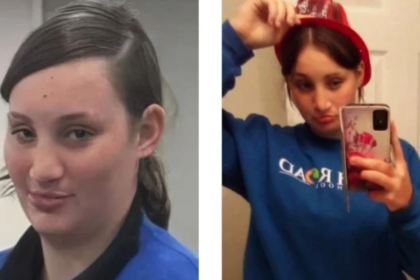


From Law to the Ice: The Amazing Story of Katie Verderber and her Journey to the Winter Paralympics 2026.
Curing stones are not the first thing that may come to your mind when you are aware of a courtroom. And ranking the road between military service and sports, many would imagine that it goes like a straight line; however, the way of Katie Verderber is a course that can not be predicted. In the near future, this Montanan, a trained attorney and former U.S. Army legal officer, will have fulfilled a dream very few would have ever imagined: he is going to compete in wheelchair mixed curling at the 2026 Winter Paralympics in Cortina d’Ampezzo, Italy.
- From Law to the Ice: The Amazing Story of Katie Verderber and her Journey to the Winter Paralympics 2026.
- Montana Roots to Military Service.
- The finding of Adaptive Sports -A New Ice-bound Chapter.
- Debut to Paralympian: A Dream Realized.
- The Ratio of Her Story Matters: Inspiration, Inclusion, and Hope.
- The Future: Ice, Competition, and Community.
Montana Roots to Military Service.
Katie was brought up in a small town of Valier, Montana, where society, backbone, and industriousness are ingrained. She devoted her service to others and thus became a Judge Advocate General (JAG) officer with the U.S. Army by studying law. She was in that position because she had to handle hard issues: military justice, administrative law even deployment overseas. This year (2019), she was deployed to Afghanistan, and she provided her services when integrity and dedication were needed the most.
However, life may transform within a flash of a second. The resultant severe service injury led to medical retirement. Such a blow to most men would have spelled the end or a retreat – but Voorerber did not view it that way.
In Montana, she changed the gears. Using her legal education, she has entered the Silverman Law Office, and since then, she has developed a career in business, contract, real estate, and probate. Her devotion to the community and her cause of justice could not be broken, even when she had to redefine her road ahead due to physical scars.
The finding of Adaptive Sports -A New Ice-bound Chapter.
She went to adaptive-sports clinics for disabled veterans after her military retirement. It was an hour of modest inquiry, but an hour that predetermined a fresh vocation. Wheelchair curling was her first experience at a Colorado winter-sports clinic. The combination of strategy, accuracy, and teamwork in the sport resonated.
Although she did not know anything about curling a few months ago, she tossed her first stone, experienced the cold of ice beneath the trajectory of the stone, and discovered the fire of something significant. She quickly devoted herself to the sport, and she participated in a selection process that lasted through winter camps, trials, and competitions.
Her efforts paid off towards the end of 2025 when she was finally awarded to the U.S. team in wheelchair mixed curling in the 2026 Paralympic Winter Games.
Debut to Paralympian: A Dream Realized.
Selection wasn’t easy. The selection camps and repeated trials, the national-level examination were only the steps of the long and painful process required to be done with the hopeful athletes by the national governing body. A total of five athletes were finally selected – 2 Paralympic veterans, 3 newcomers. Katie is among the newcomers.
Later, when she was called by name as the last selection, she says that it was surreal; she experienced a state of total pride, disbelief, and gratitude. She recalled the moment to be a time that it took to sink in, not only to herself but also to every other person in her life who believed in her potential way before she herself had ever believed it herself.
At this point, Katie is at the entrance to the largest arena of adaptive sports. Her first appearance will be during the 2026 Winter Paralympic Games that will take place in Italy on March 6. She will be dressed in national colors on the ice. Off the ice, she takes with her an account of being tough, of not letting anything keep her down, and of the unspoken yet strong strength of second chances.
The Ratio of Her Story Matters: Inspiration, Inclusion, and Hope.
The experience of Katie is relatable on a variety of levels. To begin with, as a veteran, she portrays the reality that is easily forgotten, that service members may have injuries that change their lives forever, and that resilience does not stop at the end of military careers. That she has resorted to adaptive sports highlights the power of rehabilitation and reinvention, rather than recovery, that can mark the second act.
Second, being a person who combines a busy career in law with being a high-profile sports star, she breaks down the stereotypes of disability. She demonstrates that being disabled does not imply incapacity. Her success contributes to the change of the narrative in a world where the media tends to point out more often the disability (as a challenge) than the identity (as an aspect of it).
Lastly, she is a Paralympian, freshly minted, which makes her someone of possibility. She may not get a medal, but the fact of her being there, competing, representing, striving, is important. To millions of people with disabilities or of traumatized origin, the story of Katie is a living symbol of hope: of perseverance, reinvention, and an indomitable human soul.
The Future: Ice, Competition, and Community.
Katie and her teammates will be tough in the following months. Planning, staff organization, and physical training – it will include all details. Curling is not only about strength but also accuracy, communication, and collaboration. In the case of wheelchair mixed curling, synergy is even more important.
The viewers worldwide will be watching when March 6, 2026, comes and the games commence. The events are supposed to be aired on NBC and streaming platforms, which would provide a platform where the sport would be performed, as well as where stories such as those of Katie, stories of courage and redemption, and personal victory.
But outside the stage, there is a more significant influence. Veterans who are young, individuals who have just started living with disabilities, families hanging around the story of Katie give one something worthwhile: a lesson that life does not stop when things go badly. Sometimes, a new road emerges.