
Crosshairs: The most recent battle in Late-Night.
This week witnessed a new conflict in the culture wars/comedy wars with Donald Trump publicly suggesting that he wants Seth Meyers to be fired on his late-night show at NBC. The trigger? One of the sketches on Late Night with Seth Meyers that criticized recent comments of Trump provoked the wrath of the former president.
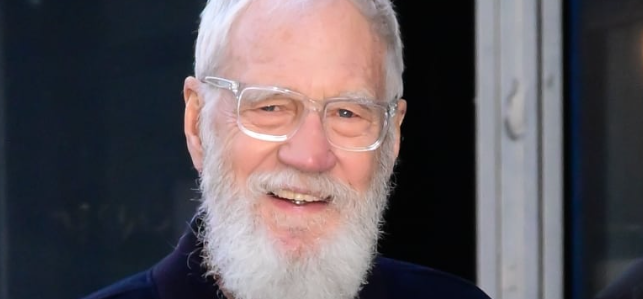
There came a voice from the past of the late-night: David Letterman, himself once its powerhouse, who did not hesitate to enter that storm. Letterman, in a statement issued a few days back, said that he had never felt prouder of Meyers than he did now, and that he was merely a comedian, doing what comedians had to do when such mighty individuals had crossed the limits.
What Sparked the Fury
The scandal started when Trump went to social media to express his disapproval of Meyers. He described the host as a talentless individual, he claims that he has a case of Trump Derangement Syndrome, and that he has to fire him. The remarks were made following a rerun of a past episode where Meyers had satirized some of the controversial statements of Trump.
This was not new to Meyers, whose late-night monologues frequently traveled along the boundary between satire and political commentary. However, the fact that the president publicly requested his dismissal appeared as a direct assault on the freedom of creativity in the minds of many.
Meyers came out the following time with all his typical wisdom and dignity. He played down the fact that he was targeted by the former president as if he were a special person, but made it seem like it was another day in the office.
Letterman Steps In: The Defence Of a Veteran.
It was at this moment that Letterman, the house name of the golden age of the late-night, found himself needing to voice his opinion. He made a brash and confrontational appearance on the Barbara Gaines Show:
The United States president now wishes to fire Seth Meyers. And I suppose, this is most charming. What do you suppose they will do with that?
He recalled the heritage of the show, pointing out how Meyers is doing the same time slot that Letterman used to have, and how he is doing a magic job.
But support was not all Letterman did. He made a serious threat, warning Meyers (and all his audience) of the fact that where great men are displeased, everything takes place. He claimed the administration was acting like a dictatorship, and he termed what he referred to as a wonder of idiocy playing out in the upper echelons of power.
Simply put, when Letterman was defending the right of Meyers to joke, he was also defending the sacredness of satire.
The Implications of This to Late-Night and Free Speech.
It is the idea behind this moment, a call on behalf of a mass media to be dismissed by a previous president, that points to an increasing strain in American media, the conflict of power between commentary and censorship, satire and authority.
The late-night TV has been a sort of national pressure valve, a place where politics, national frustrations, and humor converge. When the pressure valve comes into danger, it is not only a show or a host under threat, but a wider culture of open criticism.
The participation of Letterman shows how the stakes have become serious. He is not merely doing a favor to a friend. He is ringing the bells over a possible change: from the freedom of speech and the freedom of satire to the freedom of silence.
In the case of Seth Meyers, the Show Must Go On -But the Pressure Is Real.
Seth Meyers has answered the criticism in typical determination. He has not been secretive about his political inclinations, and he has never hesitated in speaking out against power when he perceives it. However, now, when a former president openly demands that he be fired and a former late-night veteran came to his defense, there is no greater focus than ever.
- To audiences, that could translate to increased tension, stinging criticism, and a new appreciation that late-night isn’t merely entertainment, but a front on the discussion with the entire population.
- To networks as well as hosts, it may compel a re-evaluation: just how far can satire go before it becomes the subject?
- And speaking of comedy per se, there is a question: When jokes are threats, what happens to free speech?
Final Thoughts
The aftereffects of this most recent confrontation are still in the air, but one thing is evident: this is not merely a quarrel between a television host and a former president. It is an experiment of media autonomy and of satire still having a platform in a world where authority can so readily insist upon silence.
Seth Meyers is not alone, with the voice of David Letterman joining the choir of well-wishers. And perhaps that is precisely what is meant: comedy and commentary require bravery. Since occasionally, the humor we laugh at nowadays is the humor that reminds us of the reality that we cannot step away from tomorrow.