
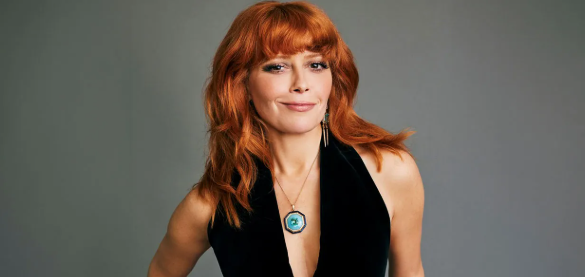
Lyanne Speaks Out: AI Apocalypse.
In the recent Brainstorm speech, Natasha Lyonne had to face the accumulated hysteria about AI-generated actors and content. In a speech that was brash and straightforward, she termed the panic around synthetic talent as a fear tactic. The panic, to her, is not about what AI is, but what it may turn into. Instead of feeling indignant, she challenged movie industry leaders not to judge a book by its cover and examine what AI can really do.
- Lyanne Speaks Out: AI Apocalypse.
- The Birth of a New Studio: Creative, Conscious, and Copyrightclean.
- Not Antitech But Pro-Humanity: A Medium Way between the Two.
- The point of this is Why This Matters: Hollywood at a Crossroads.
- What Viewers Must Remember: It is not about replacing faces; it is about adding more dreams.
The Birth of a New Studio: Creative, Conscious, and Copyrightclean.
Lyonne is not merely talking; she is in action. Being one of the co-founders of Asteria Film Co., she is constructing a studio, which will utilize AI in a responsible manner. Asteria seeks to make movies based on AI tools that have been trained solely on lawfully-vetted data, without the copyright scandals that have enveloped other projects with digital media. To Lyonne, it is not about substituting human creativity but adding to the toolset: another method of telling a story when the real world of filming would have made it impractical due to budget constraints, time constraints, or logistics.
Not Antitech But Pro-Humanity: A Medium Way between the Two.
Lyanna is not opposing AI; it is a fight in favor of subtlety. She contends that technology is just like any other tool; it relies on the hands that use it. To her, AI can democratize the filmmaking industry: to allow potential storytellers to build worlds, images, and scenes that were previously their prerogative. Meanwhile, she reminds us not to allow fear and sensationalism to dictate the discussion. Whether to consider AI as being good or bad, she believes that it is reductive, which is ultimately unhelpful.
The point of this is Why This Matters: Hollywood at a Crossroads.
The moment when Lyanne makes her push is not the right time. The emergence of AI-created actors such as Tilly Norwood has created a blanket response in unions, current stars, and several in the industry, who worry about losing their jobs, undermining of the craft or other moral implications. Asteria insists on a third way, which is based on art and both consent and legality, to question the myth that innovation must be a commodity that must be traded off with integrity. The reaction of the industry might determine the future of the film and media in the coming years.
What Viewers Must Remember: It is not about replacing faces; it is about adding more dreams.
To viewers, this controversy is not technical, but emotional. Voice, expressiveness, vulnerability: these are what actors in the human world make breathe. What Lyonnae and her associates suggest is not an overthrow, but an extension. Think of movies shot with mixed ensembles, fantastic realms, and narratives that could not have been shot conventionally. The success or failure of such a vision will not be decided by AI, but by the storytellers themselves: their compassion, their imagination, and the desire to place humanity at the heart of it.