
Meeting Before Fame: When Friendship Was Possible
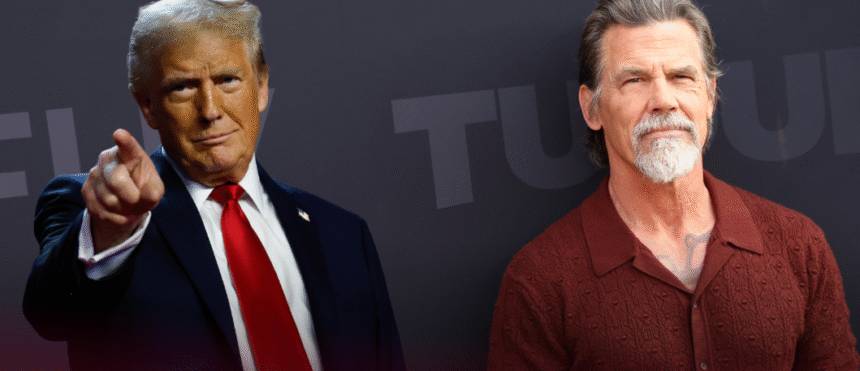
Long before political headlines and presidential campaigns, Josh Brolin and Donald Trump first crossed paths during the making of Wall Street: Money Never Sleeps, around 2010. At that time, Trump was still primarily known as a real‑estate mogul and businessman, not a politician. Their connection reportedly came from a shared interest in Trump’s ambitious real‑estate ventures. For Brolin, the idea of building a lavish hotel “in the middle of a cesspool city” intrigued him, and in that world of deals, Hollywood, and speculation, friendship seemed possible.
- Meeting Before Fame: When Friendship Was Possible
- Admiration for the Hustle: Calling Trump a Marketing “Genius”
- Power Unchecked: When Admiration Meets Disillusionment
- The Mask and the Reality: What Trump Symbolized for Many
- A Cautious Distance: Brolin’s Evolving View, and What It Says
- What This Reminds Us About Fame, Power, and What Lies Between
Admiration for the Hustle: Calling Trump a Marketing “Genius”
Looking back now, Brolin acknowledges that Trump had a knack for a rare ability to market himself and his vision in a way that resonated. He describes Trump as “the greatest genius” at turning ambition into image, understanding the fears and desires of a vast swath of people and offering them something that felt like hope, identity, and validation. According to Brolin, that marketing skill is why Trump attracted so many followers. In that sense, regardless of politics or morality, there was respect for the showmanship, the business instinct, the survival‑of-the‑fittest mentality.
Power Unchecked: When Admiration Meets Disillusionment
But admiration doesn’t mean blind loyalty. Brolin also expresses serious reservations about what happened when that marketing genius met political power. He warns that today’s force seems “unregulated, unmitigated.” The Trump he once knew as an entrepreneur appears, in Brolin’s view, transformed: more extreme, more influential, wielding power that may exceed what any democracy should allow. It’s a shift that makes the old friendship feel distant and the man he once knew unrecognizable.
The Mask and the Reality: What Trump Symbolized for Many
According to Brolin, part of Trump’s appeal lies not in concrete policies, but in something more psychological: offering people a sense of validation, a voice, a “mascot.” For many, Trump wasn’t just a candidate; he was a symbol of frustration, longing, and identity. That, Brolin suggests, is where the real “genius” lies. Whether or not you agree with his politics, you can see how the optics, the message, the charisma all became a mirror for people seeking affirmation. It’s a phenomenon bigger than one man; it’s about what people feel they lack, and what they hope to reclaim.
A Cautious Distance: Brolin’s Evolving View, and What It Says
Brolin doesn’t claim to support Trump anymore. He says that even though he once considered him a friend, time and context have changed everything. What started as curiosity, business‑world camaraderie, and perhaps admiration has turned into wary reflection. Brolin admits he’s not “scared” of what Trump might do, but he’s wary of what unregulated influence can mean for society. His words aren’t a condemnation of supporters so much as a warning about the seductive power of image and rhetoric when divorced from accountability.
What This Reminds Us About Fame, Power, and What Lies Between
The story of Brolin and Trump is more than a snapshot of Hollywood meeting business; it’s a reminder that relationships built on ambition and glamour can survive only until time, power, and consequences catch up. It also shows how a man’s rise can reshape how everyone around him sees him and forces old friends, admirers, or rivals to ask hard questions. For Brolin, this reflection seems to be part of a broader reckoning: with the cost of loyalty, the weight of influence, and the blurry line between admiration and complicity.