
Kurt Angle’s Unexpected Journey into Heel Territory
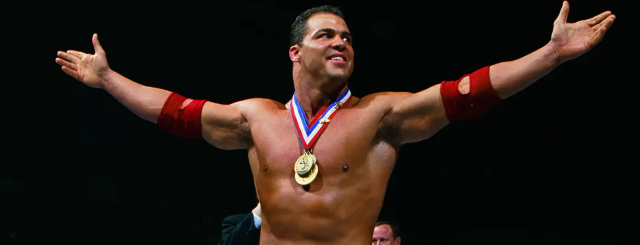
Kurt Angle, Olympic gold medalist turned WWE icon, once believed his greatest strength, his integrity, would always make him a hero in the ring. But early in his wrestling career, he learned the hard way that fans don’t always cheer what they should. Today, reflecting on his legacy, Angle shares how he came to accept even loving being a heel, and how that twist became central to his character’s power and longevity.
From Olympic Hero to Ring Hypocrisy
When Angle first joined WWE, his identity as an Olympic champion came with all the trappings of a clean-cut, noble athlete. His in-ring persona carried the “Three I’s”: Intensity, Integrity, Intelligence. To him, it was a natural extension of who he was, the hero in a sport where winners were supposed to be cheered.
So when Vince McMahon suggested turning him into a villain, Angle was more than surprised. He didn’t see the logic: why turn an Olympian into a hypocrite? Why make someone who seemed morally unassailable into someone fans would jeer?
McMahon’s Game Plan: “Make Them Think You’re Lying”
McMahon’s pitch was clever and ruthless. He told Angle that the very pillars of his character (the 3 I’s) would be used against him. Angle wasn’t just going to talk about intensity, integrity, and intelligence; he was going to violate them in his actions and promos. In doing so, he’d become someone the crowd could relate to in a more complicated way: not a pure hero, but a man who preached virtue while clearly doing the opposite.
Rather than make Angle a straightforward bad guy, McMahon envisioned him as an anti-hero, someone layered and believable: loved for his skills and convictions, but hated for his hypocrisy. That tension, speaking of honor while acting dishonorably, would be what made the character truly magnetic.
Shock, Doubt, and the First Boo’s
At first, Angle resisted. He was convinced the crowd would see him for his Olympic legacy and rally behind him. He argued, “I don’t think these fans are going to boo me.” But McMahon was firm: “Trust me … they’re gonna boo you.” And he was right.
When Angle made his debut, the cheers weren’t there in the way he expected. He was booed. Not just a little, the reaction was powerful, vocal, and clear. And for Angle, a man who had carried medals and medals of honor, it was disorienting. But more than that, it opened his eyes.
Understanding the Role: Hypocrisy as Character
Angle says he began to understand that his worst actions, the lying, the betrayal, the selfishness, weren’t flaws, but tools. By walking the line between what he preached and what he did, he created a character that mattered. He became someone fans loved to hate, and in wrestling, that’s magic.
He’s shared that playing a heel wasn’t easy. His character was complex, not cartoonish. He had to deliver intensity and conviction while undermining those same values. But he understood the psychology: fans would buy into him because they saw something real. They saw a conflict, not just a bad guy.
Why Being a Heel Was Easier and More Fun
In his later reflections, Angle has said that being a villain was, in some ways, simpler. As a heel:
-
He didn’t need the crowd to like him; he just needed them to react.
-
He didn’t have to pretend to be perfect; he could lean into his hypocrisy.
-
He could provoke, taunt, and challenge his audience without worrying about being a symbol.
He admitted that a lot of the great wrestlers, especially in his era, struggled to come across as likable heroes. But as a heel? He could be unapologetically himself, flawed, intense, and deeply human.
Legacy: Why His Heel Turn Still Matters
Angle’s decision to lean into the villainous side of wrestling wasn’t just a career move; it was transformative. It shaped how he told stories, how he connected with fans, and how he defined his identity in the ring. His “Three I’s” weren’t just a gimmick; they became a moral framework to be twisted, challenged, and used as a weapon.